Karbala and the Urdu Marsiya: how a historic tragedy became the soul of Urdu literature
.jpg&w=1920&q=75)
Some events belong to history, while others transcend time and become part of a civilization's collective conscience. The tragedy of Karbala, which took place in 680 CE on the plains of present-day Iraq, is one such event. Although rooted in Islamic history, Karbala has inspired poets, philosophers, artists, and writers for over fourteen centuries. In South Asia, it found perhaps its most profound artistic expression in Urdu Marsiya, a literary tradition that transformed historical memory into one of the greatest achievements of Urdu literature.
More than a tale of war, Karbala is remembered as the triumph of truth over tyranny, moral conviction over political power, and sacrifice over submission. The martyrdom of Imam Hussain ibn Ali, the grandson of Prophet Muhammad, became a timeless symbol of resistance against oppression. For Urdu poets, Karbala was not merely an event to narrate, it was an emotional universe through which universal values such as justice, loyalty, courage, compassion, and human dignity could be expressed.
It was this profound emotional and moral impact of Karbala that gave birth to one of the most distinctive genres of Urdu poetry, the Marsiya. Over the centuries, poets transformed the remembrance of Karbala into a rich literary tradition, preserving not only the historical events but also the ideals that they represent. To appreciate the significance of this genre, it is important to first understand what a Marsiya is and how it evolved into one of Urdu literature's finest poetic forms.
- Suggested Course
Introduction to Urdu Language, Literature and Culture
What is a Marsiya?
The word Marsiya is derived from the Arabic word "Rasa", which literally means to mourn the dead. In literary terms, a Marsiya is an elegy, a poem that commemorates the virtues of the deceased while expressing grief over their loss.
Urdu literature recognizes two broad kinds of Marsiya. The first is the Shakhsi Marsiya (Personal Elegy), written to mourn the death of an individual. The second, and by far the more celebrated, is the Karbalai Marsiya, which recounts the events of Karbala and commemorates the martyrdom of Imam Hussain and his companions.
Although elegiac poetry flourished in Arabic and Persian, it was in Urdu that Marsiya attained extraordinary literary refinement. The genre evolved from a simple lament into a sophisticated poetic form capable of combining history, drama, philosophy, symbolism, and emotional depth.
The golden age of Urdu Marsiya
The foundations of Urdu Marsiya were laid in the Deccan during the sixteenth century and later developed by poets in Delhi. A major turning point came when Mirza Rafi Sauda popularized the Musaddas (six-line stanza), which eventually became the standard structure for Marsiya.
However, the true golden age of Marsiya belongs to Meer Anees and Mirza Dabeer.
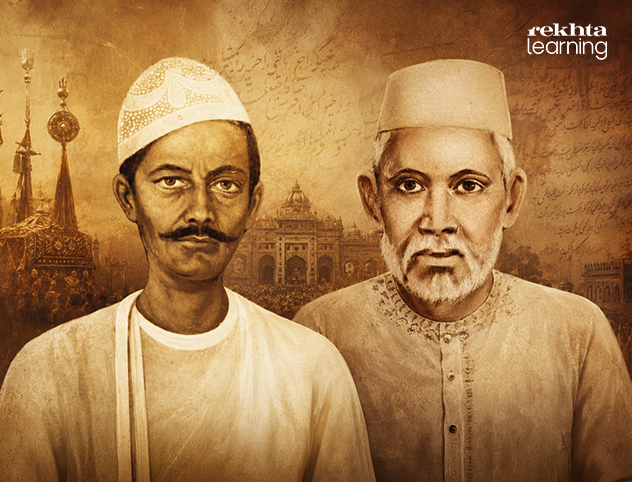
These two legendary poets elevated Marsiya to such artistic heights that their works remain unmatched even today. They were not merely poets; they were master storytellers who recreated the entire world of Karbala through vivid imagery, dramatic dialogue, psychological insight, and unparalleled command of language. Their public recitations became one of the most celebrated cultural traditions of nineteenth-century Lucknow.
Their poetry ensured that Karbala would not remain confined to history books. Instead, it became a living literary tradition passed from one generation to another.
The structure of Marsiya
One of the remarkable qualities of Urdu Marsiya is its carefully designed narrative structure. Rather than simply describing the tragedy, the poet unfolds the story scene by scene, much like a classical epic or dramatic performance. Traditionally, a Marsiya consists of eight major sections.
The journey begins with the Chehra, an introductory section in which the poet invokes God, praises the Prophet, and prepares the emotional atmosphere. Meer Anees opens one of his celebrated Marsiyas with a heartfelt prayer:
yaa Rab! chaman-e-nazm ko gulzaar-e-iram kar
ae abr-e-karam! khushk zaraa'at pe karam kar
The Saraapa follows, presenting detailed portraits of the heroes of Karbala. Physical beauty is portrayed not merely for aesthetic pleasure but as a reflection of moral excellence. Describing Hazrat Ali Akbar, Anees compares him to the most beautiful flower in Imam Hussain's garden, celebrating both his grace and noble character.
The emotional intensity deepens with Rukhsat, the farewell scene before battle. Family members bid goodbye, fully aware that this parting may be their last. One of the most touching examples is the departure of Hazrat Zainab's young sons:
ye wo hain jo aaghosh mein Zainab ke pale hain
bachche bhi teri raah mein marne ko chale hain
The Aamad introduces the arrival of the warriors on the battlefield. Meer Anees and Mirza Dabeer portray Hazrat Abbas and Imam Hussain with majestic imagery, comparing them to fearless lions whose very presence shakes the battlefield.
Next comes the Rajaz, where the warrior proclaims his lineage, faith, and courage before combat. These verses are not boasts but declarations of moral purpose, affirming that the battle is one for justice rather than worldly power.
The Jang (Razm) forms the dramatic climax. Here the battlefield comes alive through dazzling poetic imagery. Spears collide, swords flash, horses thunder across the desert, and the conflict between truth and falsehood unfolds before the reader's eyes.
The section of Shahadat recounts the martyrdom of the heroes. Meer Anees describes the final moments of Imam Hussain with such emotional power that the scene becomes unforgettable:
Girte hain ab Hussain faras par se hai ghazab…
The final section, Bain, gives voice to the grief of the surviving family members. These lamentations are among the most moving passages in Urdu poetry, expressing not only personal sorrow but the universal pain of losing righteousness itself.
Karbala in the Imagination of Urdu.
One of the greatest achievements of Urdu Marsiya is that it transformed an event that occurred in seventh-century Arabia into a living part of the cultural imagination of South Asia.
The heroes remained Arab, the historical event remained unchanged, yet Urdu poets narrated it through the emotional vocabulary, social customs, and cultural aesthetics of the Indian subcontinent. Clothing, family relationships, gestures of affection, expressions of grief, and even domestic conversations were presented in a distinctly Hindustani setting.
This remarkable cultural adaptation allowed generations of readers and listeners to experience Karbala not as a distant historical event but as something deeply personal and emotionally immediate.
It is perhaps for this reason that Marsiya occupies a unique place in Urdu literature. It is simultaneously history, poetry, theatre, philosophy, and collective memory.
Beyond poetry: a cultural legacy
The influence of Karbala extends far beyond Marsiya. It inspired other literary genres such as Nauha, Salam, and Manqabat, each preserving different emotional dimensions of the tragedy.
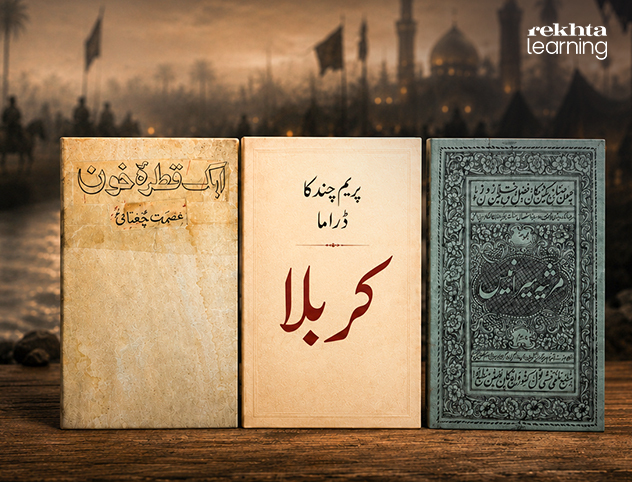
Urdu prose also bears the imprint of Karbala. Writers like Ismat Chughtai, in Ek Qatra Khoon, reimagined the tragedy through fiction, while Premchand's play Karbala highlighted its universal ethical message and its relevance to communal harmony and social justice.
Through these diverse literary forms, Karbala has remained a continuing source of artistic inspiration rather than merely an episode of religious remembrance.
Why Marsiya still matters?
In today's world, Marsiya deserves to be appreciated not only as devotional poetry but also as one of the greatest narrative achievements of Urdu literature. It combines lyrical beauty with historical storytelling, emotional intensity with philosophical reflection, and artistic excellence with moral purpose.
The enduring popularity of Meer Anees and Mirza Dabeer lies in their ability to transform historical memory into universal human experience. Their verses speak not only to believers but to anyone who values courage, integrity, sacrifice, and justice.
More than fourteen centuries after the tragedy of Karbala, and nearly two centuries after the masterpieces of Anees and Dabeer were composed, Urdu Marsiya continues to remind us that literature can preserve history more powerfully than monuments, and that poetry can keep alive the ideals for which great souls sacrifice their lives.
Karbala, therefore, is not simply remembered, it is recited, performed, studied, and lived through the tradition of Urdu Marsiya. In doing so, Urdu literature has transformed an event of history into one of the world's most enduring cultural and literary legacies.
 All-access
- 0 in-depth courses
- 0+ lessons
- 1 year unlimited access
- Unbeatable discount
- Watch on any device
- Get certified

%20NEW.jpg&w=750&q=75)

.jpg&w=750&q=75)


.jpg&w=828&q=75)


.jpg&w=828&q=75)


.jpg&w=828&q=75)


.png&w=828&q=75)


.jpg&w=828&q=75)

Comments