Gul and gul: when one letter changes the world of meaning
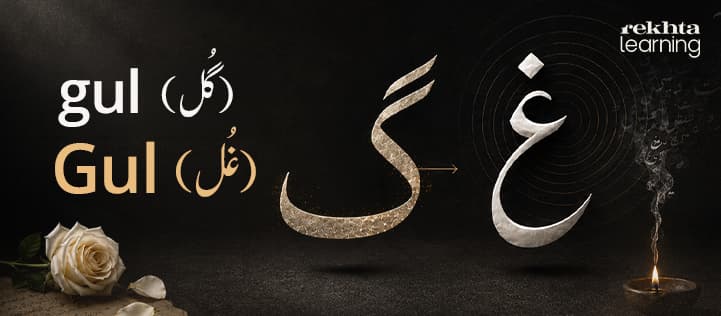
If I ask “ do you know the meaning of gul گُل , you might smile and say that anyone with even a little interest in Urdu knows that gul means flower. Many even call classical Urdu poetry “gul-o-bulbul ki shayeri” - poetry of flowers and nightingales.
Of Persian origin, gul has long been a symbol of beauty, colour, delicacy, and fragrance. Any word joined with gul becomes soft, graceful, and aesthetically rich, for example, gul-badan, meaning a person with a body as lovely as a flower. Making a complete list of compound words formed with gul would not be easy at all.
But one of the most beautiful uses of the word appears in a famous couplet of Ghalib, where we find the stunning expression gul-e-naghma, meaning the flower of melody, used for the deep effect and beauty of music:
نہ گل نغمہ ہوں نہ پردۂ ساز
میں ہوں اپنی شکست کی آواز
na gul-e-naġhma hoon na parda-e-saaz
main hoon apni shikast ki aavaaz
"I am neither the blossom of song, nor a melody veiled within the strings
I am merely the voice of my own defeat.”
If gul is a metaphor of beauty and charm, then why is extinguishing a candle or lamp called sham‘a gul hona - the candle turning into “gul”?
Perhaps you also remember the famous verse by Dagh Dehlvi:
شب وصال ہے گل کر دو ان چراغوں کو
خوشی کی بزم میں کیا کام جلنے والوں کا
shab-e-visaal hai gul kar do in charaaghon ko
ḳhushi ki bazm mein kya kaam jalne vaalon ka
- Suggested Course
Introduction to Urdu’s Linguistic Uniqueness
This is the night of union - extinguish these lamps;
In a gathering of joy, what place is there for those who burn?”
And when a prominent figure passes away, we often hear the expression:
Ek charaagh gul ho gaya
A lamp has gone out.
This shows that gul has another meaning as well:
The snuff or burnt soot of a candle or lamp, or even the tobacco pellet left unsmoked in a hookah or pipe
From gul to Gul غُل
There is another word that sounds similar: It is Gul غُل
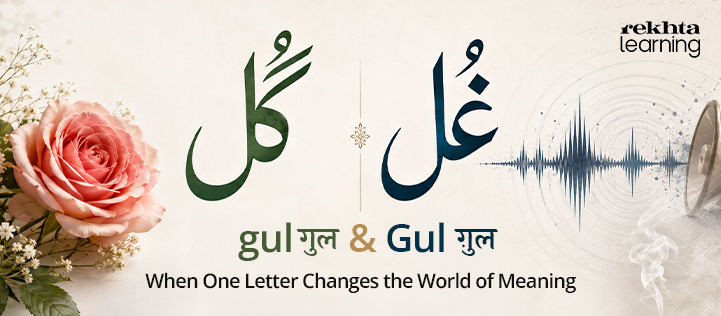
Only the first letter changes - gaaf (گ) becomes ghain (غ) - and the meaning changes completely.
Where ‘gul’ refers to delicacy and beauty, in Urdu Gul means noise, clamour, uproar, confusion of voices
This gives us the common expression:
“Gul machaana” - to make noise, to shout, to cause an uproar
The word Gul is Arabic in origin, and we often hear the paired expression:
“shor-o-Gul” - noise and uproar.
a phrase many people use to complain about the loudness of city life.
But a poet may feel it differently:
روز و شب کے شور و غل کے باوجود
اک طرح کی خامشی ہے شہر میں
roz-o-shab ke shor-o-ġhul ke baavajood
ik tarah ki ḳhaamushi hai shahr mein
“Despite the noise and hustle of day and night, there is a kind of silence in the city.”
GulGulaغُلغُلہ - When Noise Becomes a Movement
Another beautiful word derived from the same root is GulGula.
It can mean:
fame or renown
uproar or public noise
hullaballoo, agitation, a social tremor
The word appears both in everyday speech and in poetry.
Humaira Rahman uses it powerfully in a feminist context:
جب کبھی عورت کی آزادی کا اٹھا غلغلہ
وقت عورت کو نئی ہی بیڑیاں پہنا گیا
jab kabhi ‘aurat ki aazaadi ka uTTha ġhalġhala
vaqt ‘aurat ko naii hi beḍiyaan pahna gaya
Whenever the call for women’s freedom grew loud,
it was women who were given new chains to wear.
Conclusion
From gul, گُل the flower symbolizing beauty and fragrance,
to sham‘a gul hona, شمع گُل ہونا the extinguished candle;
from Gul غُل, the uproar of voices, to GulGula, غلغلہ the noise that shakes society.
Urdu takes us on a fascinating journey of meaning, where a change of just one letter can open the doors to entirely new worlds.
 All-access
- 0 in-depth courses
- 0+ lessons
- 1 year unlimited access
- Unbeatable discount
- Watch on any device
- Get certified

%20NEW.jpg&w=750&q=75)


.jpg&w=750&q=75)





.jpg&w=828&q=75)


.jpg&w=828&q=75)


.jpg&w=828&q=75)


.jpg&w=828&q=75)


.png&w=828&q=75)


.jpg&w=828&q=75)

Comments