Composite culture in Urdu literature

The most beautiful aspect of the Indian subcontinent’s culture is its Ganga-Jamuni tradition, a harmonious blend of different religions, cultures, languages, and communities. This very spirit forms the foundation and soul of Urdu literature. Urdu is not merely a language; it is a cultural symbol that has, for centuries, acted as a bridge between diverse communities and faiths. Urdu literature has consistently promoted mutual respect, tolerance, and brotherhood among Hindus, Muslims, Sikhs, Christians, and others. This is its true strength and identity.
Early period: The beginning of common values
Urdu itself was born in a composite cultural environment. In cities like Delhi, Deccan, Lucknow, and Hyderabad, the interaction of Persian, Arabic, Sanskrit, Braj, Khari Boli, Dakkni, and other languages gave rise to Urdu.
The works of early poets such as Amir Khusro, Wali Dakni, and Quli Qutb Shah reflect not only linguistic diversity but also cultural harmony. Urdu poetry carries the many colors of Indian civilization. Dakni poets enriched the language by incorporating Hindi, Sanskrit, and regional vocabulary.
Khusro’s riddles, couplets, and songs remain part of popular tradition even today and are loved across religious communities. His poetry beautifully captures various aspects of Indian culture and society, blending multiple languages such as Khari Boli, Urdu, Persian, Hindi, and Hindavi.
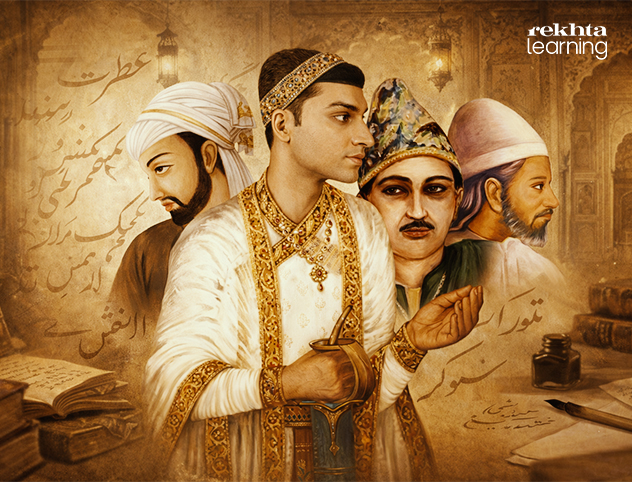
The sufi tradition: Literature that unites hearts
Sufi thinkers played a central and far-reaching role in Urdu literature. Saints like Khwaja Nizamuddin Auliya, Bulleh Shah, Khwaja Mir Dard, and Sachal Sarmast spread messages of humanity, love, and tolerance that rose above religious divisions.
Their teachings touched the hearts of ordinary people and created a space where spiritual unity mattered more than religious differences.
A key feature of Sufi poetry was its accessibility. It spoke in the language of the people, understood their emotions, and expressed their struggles. This is why their verses are recited and sung everywhere, from shrines to fairs and poetic gatherings, regardless of the listener’s religion.
- Suggested Course
Introduction to Urdu Language, Literature and Culture
Dastan and traditional narratives
Urdu narrative traditions, such as Dastan-e-Amir Hamza and Bagh-o-Bahar, are not only rich in storytelling but also reflect a fusion of Hindu mythology, Islamic traditions, and Persian and Turkish tales.These stories introduced people to each other’s cultures and nurtured a sense of shared identity rather than division.
The nineteenth century: A shift in cultural consciousness
After 1857, as the subcontinent entered a new political and social phase, cultural awareness deepened in Urdu prose. Sir Syed Ahmad Khan used Urdu to promote education, scientific thinking, and religious tolerance. His contemporaries, such as Hali and Shibli, also highlighted the idea of a shared culture in their writings.
Meanwhile, writers like Pandit Ratan Nath Sarshar and later Premchand used fiction to depict rural life, communal harmony, and human equality. Premchand’s characters belong to both Hindu and Muslim communities, yet their struggles, desires, and emotions are universal, reflecting cultural unity.Urdu poets of this period also contributed by portraying Indian customs and ways of life, thereby strengthening harmony and collective identity.
A notable name is Nazeer Akbarabadi, whose poetry gained immense popularity among the masses. His work vividly depicts Indian seasons, festivals, and traditions. He wrote about festivals such as Diwali, Holi, Eid, Shab-e-Barat, Basant, Rakhi, and Urs, making his poetry a true representation of Indian culture.
The progressive movement: A revolutionary turn
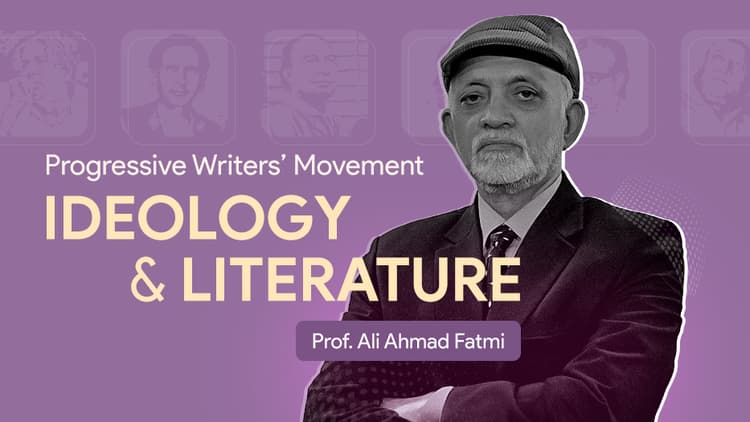
In 1936, the Progressive Writers’ Movement marked a turning point in Urdu literature. It shifted the focus from pure aesthetics to social realities. Writers like Manto, Bedi, Krishan Chander, Ismat Chughtai, and Faiz Ahmed Faiz challenged divisions based on religion, caste, gender, and class.
Their stories and poems emphasized human dignity, freedom, and equality over religious or ethnic identity.
Manto’s works such as Thanda Gosht and Toba Tek Singh portray the shared pain of Partition, experienced equally by Hindus and Muslims. These stories highlight the fractures in shared culture while also mourning the loss of that unity.
Continuity in the present era
Even today, writers and poets like Gulzar, Javed Akhtar, Rahat Indori, Kishwar Naheed, Parveen Shakir, and Anwar Shuoor continue to promote harmony and shared identity through their work.Their writings demonstrate that composite culture is not a thing of the past but a living reality.
In the digital age, platforms like Facebook, Instagram, and TikTok have enabled poets and writers to reach thousands of people. Their audiences cut across religious and social boundaries, creating a shared cultural space where Urdu continues to flourish.
Urdu literature is a mirror that clearly reflects the cultural beauty of India. It teaches us that languages, religions, and traditions may differ, but the essence of humanity remains the same.For centuries, Urdu literature has preserved this shared heritage, and this tradition continues even today. This is what makes Urdu literature distinct from the literatures of other languages.
 All-access
- 0 in-depth courses
- 0+ lessons
- 1 year unlimited access
- Unbeatable discount
- Watch on any device
- Get certified

%20NEW.jpg&w=750&q=75)
.jpg&w=750&q=75)



.jpg&w=828&q=75)


.jpg&w=828&q=75)


.jpg&w=828&q=75)


.jpg&w=828&q=75)


Comments